Japan Tightens Business Manager Visa Requirements — Capital Threshold Rises 6x to ¥30 Million
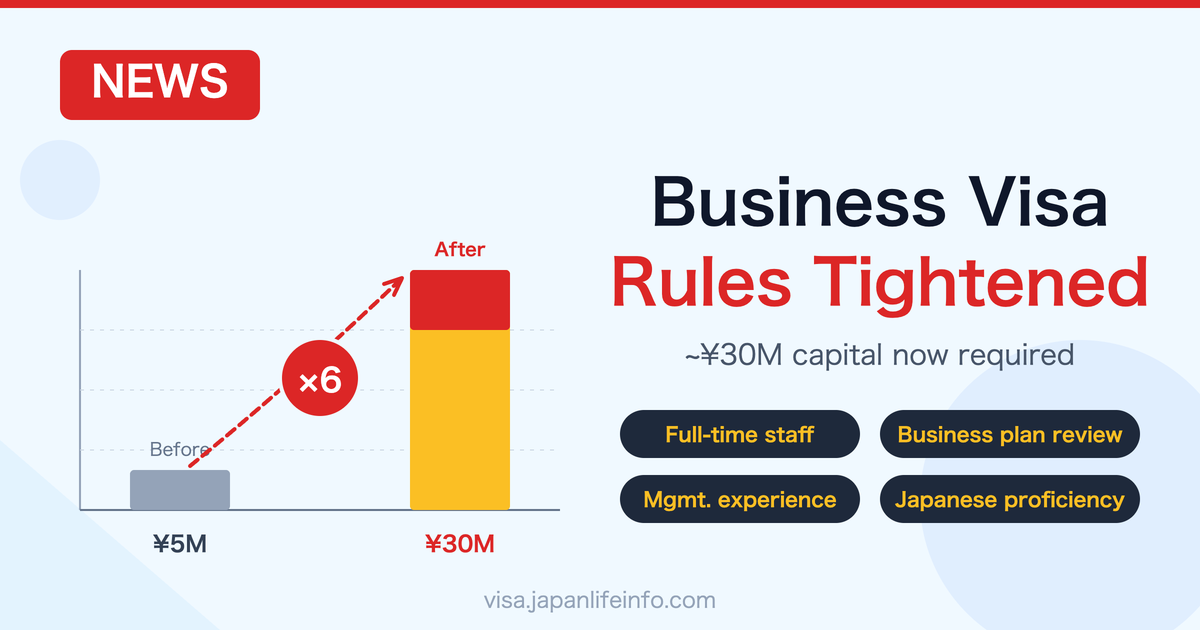
The Japanese government has significantly tightened the requirements for the Business Manager visa, creating major new challenges for foreign entrepreneurs looking to start a business in Japan. What was once accessible with relatively modest capital and a straightforward application has become a far more demanding process. This shift signals that Japan is moving away from broad-based expansion and toward selective, quality-driven screening of foreign business founders.
What Has Changed and How
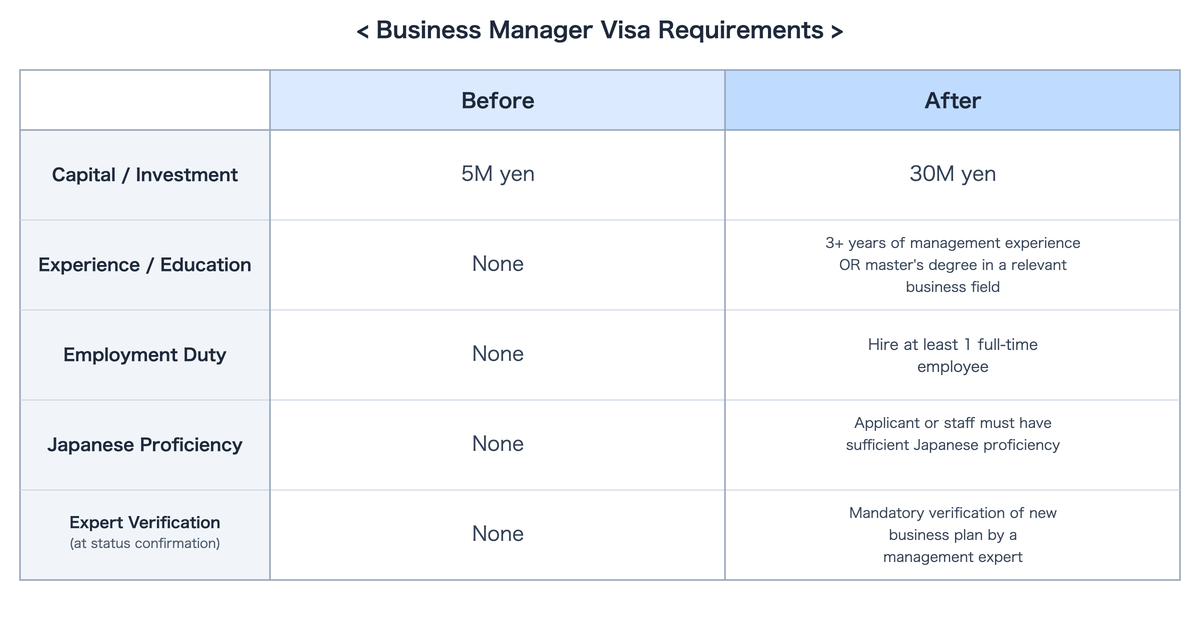
The most significant change is the capital threshold. Previously, ¥5 million in capital was generally sufficient to qualify for the visa, but under the revised rules the bar has been raised to approximately ¥30 million — more than six times the prior requirement.
Capital Alone Is No Longer Enough
Meeting the new capital threshold is necessary but not sufficient. Hiring full-time employees is now mandatory, and applicants must also undergo a formal professional review of their business plan as part of the assessment process.
Management Experience and Japanese Proficiency Required
Going further, applicants are now expected to demonstrate management experience and Japanese language proficiency, effectively requiring proof of genuine operational capability before a visa will be granted.
Why Japan Is Tightening the Rules
The driving force behind this policy change is a documented rise in visa abuse. Japan has seen a growing number of cases where the Business Manager visa was used to secure residency without any real business activity — so-called shell company incorporations set up purely to qualify for the visa.
The spread of messaging like “you can move to Japan for just ¥5 million” contributed to the visa being used as an immigration tool rather than a genuine business pathway.
In response, the Japanese government has moved to restore the integrity of the program by shifting its focus toward “genuine entrepreneurs only”, weeding out applicants who cannot demonstrate real business intent.
Impact on Japan’s Startup Ecosystem
This policy is expected to have a considerable effect on Japan’s entrepreneurial landscape. The sharp increase in capital requirements raises the entry barrier significantly for small-scale startups and sole proprietors seeking to enter Japan through this route.
Restaurants, Retail, and Low-Capital Industries Hit Hard
Sectors that traditionally required modest initial investment — such as food service and retail — will feel the impact most acutely. There are growing concerns that areas with concentrated Korean and other ethnic business communities will see fewer new entrants, and that existing operators may face heavier scrutiny at the time of visa renewal.
A Restructuring of the Startup Market
The net effect is likely to be a fundamental shift in Japan’s startup market — from a low-capital, high-volume model toward a high-capital, high-credibility structure.
Implications for Workers Considering a Future in Business
This change does not only affect current entrepreneurs. It has significant implications for foreign professionals working in Japan who are considering transitioning to self-employment down the road.
In the past, it was relatively feasible to save up while employed and then switch to a Business Manager visa. Now, applicants must demonstrate capital in the tens of millions of yen, along with proven ability to manage staff.
Additionally, the stricter standards may be applied at the time of renewal for existing visa holders, meaning those already running businesses in Japan must also prepare for increased scrutiny.
In short, starting a business in Japan is no longer simply “an option worth trying” — it has become a strategic endeavor requiring thorough preparation.
How to Respond: Strategic Advice
The most important step amid these changes is to get the direction right. Rather than aiming to start a business as a short-term goal, the focus should be on building a foundation across the following areas.
Secure Sufficient Capital
To meet the new requirements, you will need to reliably demonstrate capital of approximately ¥30 million. Given the amount involved, a long-term financial plan is essential — this is not something that can be assembled quickly.
Build a Clear Business Plan With Real Market Insight
A core part of the assessment process will be evaluating the viability of your business and your understanding of the Japanese market. Vague ideas will not suffice — you will need detailed revenue projections and a concrete staffing plan.
Develop Japanese Language Skills and Management Experience
Japanese proficiency and business management experience are no longer optional extras — they have become core evaluation criteria in the visa assessment. Building credentials such as JLPT certification and accumulating relevant work experience well in advance will put you in a much stronger position.
Summary: Key Points on Japan’s Business Manager Visa Tightening
- The Japanese government has raised the capital requirement for the Business Manager visa from approximately ¥5 million to ¥30 million — a more than 6x increase.
- In addition to capital, applicants must now satisfy requirements for full-time employee hiring, a formal business plan review, management experience, and Japanese language proficiency.
- The policy tightening was driven by a rise in shell company abuse, as Japan shifts from quantity-focused expansion to quality-focused selection.
- Small-scale startups and sole proprietors looking to enter Japan now face a substantially higher barrier, and existing visa holders face greater scrutiny at renewal.
- Anyone considering starting a business in Japan must now take a strategic approach — building capital, operational capability, and a verified business plan well in advance.