Difference Between Japanese Visa and Status of Residence
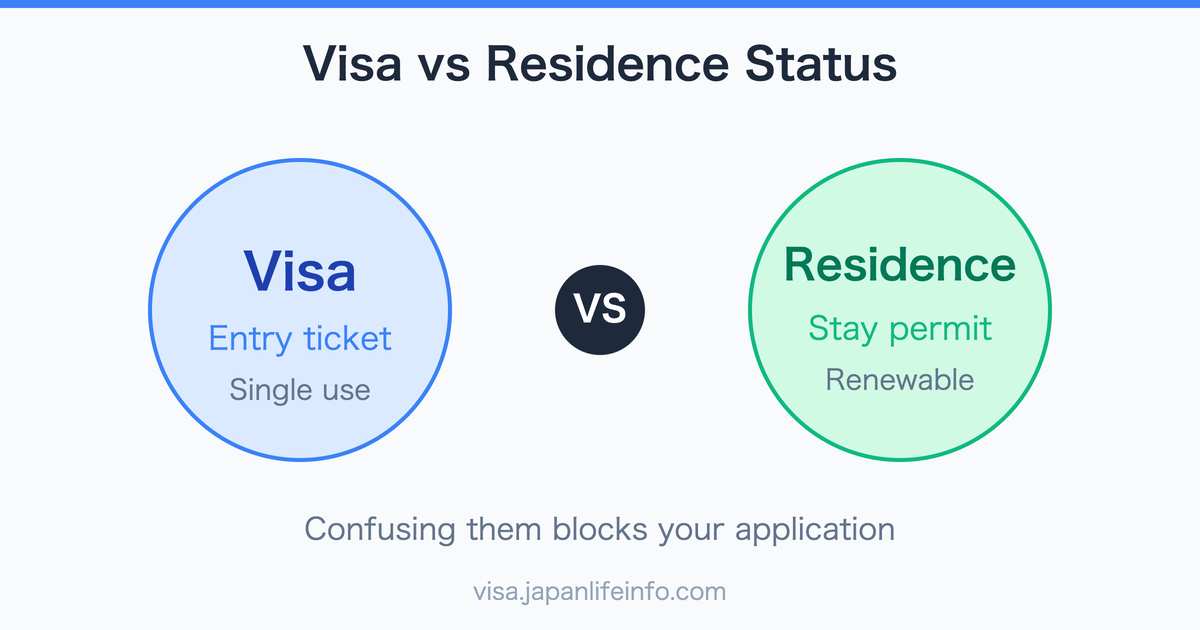
When preparing for a long-term stay in Japan, the first terms you encounter are ‘visa (査証)’ and ‘status of residence (在留資格)’. Many people use these two terms interchangeably, but they are actually completely different concepts, and confusing them can cause problems with visa applications, stay extensions, and employment.
In this article, we will clearly explain the exact difference between a Japanese visa and status of residence, and points that are particularly confusing.
What is a Japanese Visa (査証)?
A visa (Visa, 査証) is 👉 A pre-approval stamp that says “you may enter Japan.”
-
Issuing authority: Japanese Embassy/Consulate (in your country)
-
Purpose: Permission to enter Japan
-
When used: Once at entry
-
Function: Only grants the “right to enter” Japan
In other words, a visa is like an entry ticket.
Characteristics of a Visa
-
Used only once when entering Japan
-
Does not guarantee residence status after entry
-
Does not determine period of stay or scope of activities
What is Japanese Status of Residence (在留資格)?
Status of residence determines 👉 What you can do in Japan and how long you can stay.
-
Managing authority: Immigration Services Agency of Japan
-
Purpose: Regulation of residence activities and period
-
When applied: Immediately after entry
-
Indicated on your residence card
Key Roles of Status of Residence
-
What kind of work you can do
-
Whether you can be employed
-
How long you can stay (1 year, 3 years, 5 years, etc.)
-
Whether you can renew or change status
Japanese Visa vs Status of Residence at a Glance
| Category | Japanese Visa | Status of Residence |
|---|---|---|
| Role | Entry permission | Residence qualification |
| Issuing authority | Japanese Embassy | Immigration Bureau |
| When used | Once at entry | Continuous after entry |
| Residence activities | Not specified | Clearly specified |
| Renewable | No | Yes |
| Practical importance | Low | Very high |
👉 It is the ‘status of residence’ that determines your life in Japan.
Common Misconceptions
❌ “I got a visa, so I can work in Japan?”
→ No. Whether you can work is determined by the type of status of residence. If you are caught working outside your status of residence, your renewal may be rejected or in the worst case, you may be deported.
❌ “The visa period is my stay period?”
→ No. The period of stay is based on the period written on your residence card.
❌ “If my visa expires, am I an illegal resident?”
→ No. The visa has already fulfilled its role at the time of entry.
Understanding Through Real Examples
Case 1: Called it a work visa, but…
Got a job at a Japanese company from Korea → “Got a work visa” ✔ Accurate expression: Obtained a status of residence
Case 2: Have a visa but can’t stay?
Entered Japan but failed to change status of residence → Cannot stay 👉 Visa ≠ Right to stay
Why is Status of Residence More Important?
Everything important in Japanese life depends on your status of residence.
-
Whether you can work
-
Whether you can change jobs
-
Whether side jobs are allowed
-
Eligibility for permanent residence application
-
Whether you can invite family members
👉 A visa is the entrance, status of residence is life itself.
Summary: One Sentence to Remember
A Japanese visa is ‘permission to enter’, and status of residence is ‘the right to stay’.
If you are planning to stay in Japan, Building your strategy based on status of residence rather than visa is most important.
Need to apply for or change your status of residence in Japan?
Easily create your Japanese status of residence application.